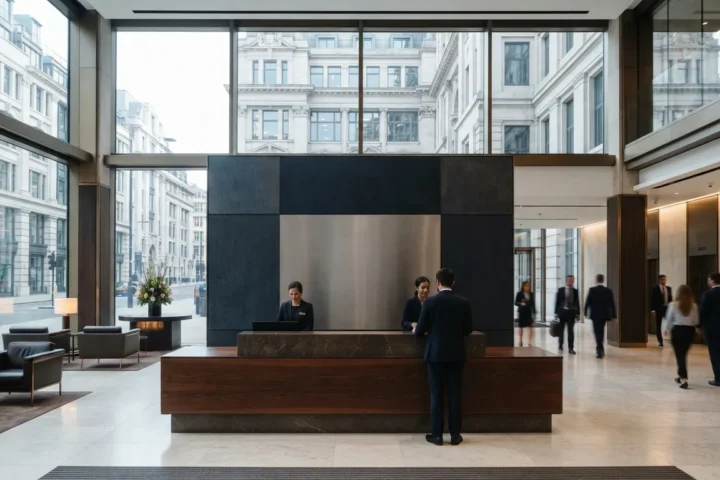

The Brown & Brown AI transformation moved from talk to a signed structure this week, when the insurance brokerage named Anthropic, McKinsey & Company and Accenture as partners instead of shopping for a single AI platform. The three-way split — a frontier model maker, a strategy consultancy and a systems integrator — is designed to reach 23,000 employees across customer service, operations, technology and corporate functions.
Anthropic, McKinsey and Accenture Split the AI Stack
Brown & Brown, the NYSE-listed brokerage founded in 1939, did not sign one vendor for an “AI transformation” package. The company said the three partners were chosen specifically because, together, they cover frontier AI capability, transformation strategy and program governance — a division of labor a single SaaS contract typically cannot replicate. That structure now underpins a rollout across a brokerage with more than 700 locations and over 23,000 professionals worldwide, according to the joint statement naming all three partners.
McKinsey’s insurance practice co-lead, Ari Libarikian, credited the broker with already showing a clear commitment to turning AI into measurable value before the consultancy was named to the engagement. Accenture’s Jim Bramblet, who leads the firm’s U.S. insurance business, described Brown & Brown as taking a forward-looking approach to using AI to drive growth and improve efficiency. Reinsurance News, covering the mandate for the reinsurance and broking market, described it as one of the most explicit vendor-unbundling moves a top-five broker has made this year. Neither partner statement addresses headcount directly, which is itself notable: the framing is entirely about capability-building, not cost-cutting.
Claude Code Already Cuts Engineering Work from Days to Hours
The partnership is not starting from a blank slate. Brown & Brown’s early pilots with Anthropic’s coding assistant returned up to eight-fold productivity gains and 80 to 90 percent faster troubleshooting, results the company is now citing to justify a full-organization rollout of Claude Code across engineering. Building on those pilot numbers, Claude Code will be deployed across the entire software engineering organization to redesign the development lifecycle end to end, rather than being handed to a subset of teams as a productivity add-on.
Anthropic’s Michael Hartman put a sharper point on the pilot data: Brown & Brown engineers are now completing in hours work that used to take days, with troubleshooting time cut dramatically and vulnerabilities caught that other tools missed. That is a stronger claim than “AI helps developers write code faster” — it is a claim about defect detection, which is exactly the kind of outcome the governance layer described below is built to verify rather than take on faith.
A Value Management Office Sits Between Ambition and Payback
The unbundled vendor structure is paired with an internal governance layer. Brown & Brown is standing up a value management office to run disciplined execution and outcomes-based evaluation of its AI initiatives, meaning the McKinsey-Accenture-Anthropic engagement reports into an internal function tasked with checking whether the promised gains show up in practice rather than staying a slide-deck projection.
Chief executive Powell Brown positioned the rollout around the workforce rather than around the technology, framing AI as a way to sharpen what the company’s people already do well rather than a tool for reducing their number.
That framing — AI as an enabler of employee expertise, specialization and judgment rather than a replacement for it — is the sentence doing the most work in the announcement. It sets up a direct contrast with how a different top-five broker has talked about AI and staffing this year.
Two Top-Five Brokers, Two Opposite Bets on Headcount
Brown & Brown’s enabler framing lands a few months after a rival broker took the opposite public position. Acrisure attributed a workforce reduction directly to automation, in what InsuraBeat covered as a broker attributing workforce cuts directly to AI automation. Brown & Brown is making the inverse bet on the same underlying technology category: same tools, opposite conclusion about what they do to the org chart. Whether that divergence reflects genuine strategy difference or simply different messaging around comparable automation is a question the two brokers’ next earnings cycles will start to answer.
The tri-vendor model also has implications beyond Brown & Brown’s own walls. Standardizing on one frontier model across an entire brokerage puts pressure on the narrower AI vendors that brokers have historically bought piecemeal — the kind of dynamic already visible in how point-solution underwriting tools built around a single task now face integration pressure once brokers standardize on frontier-model stacks. A broker running Claude across customer service, operations and engineering has less reason to bolt on a narrow third-party tool for any one of those functions.
The governance layer is its own signal about how large brokers institutionalize AI-era risk generally. Just as Willis built a dedicated product to insure against a specific new category of transaction risk, Brown & Brown is building a dedicated internal office to insure against the risk that an AI program produces activity without value. Both moves treat a new operating reality as something to be structured and monitored, not simply adopted.
Sources
- Brown & Brown, Inc. via GlobeNewswire — official partnership announcement
- Reinsurance News — coverage of the AI transformation mandate